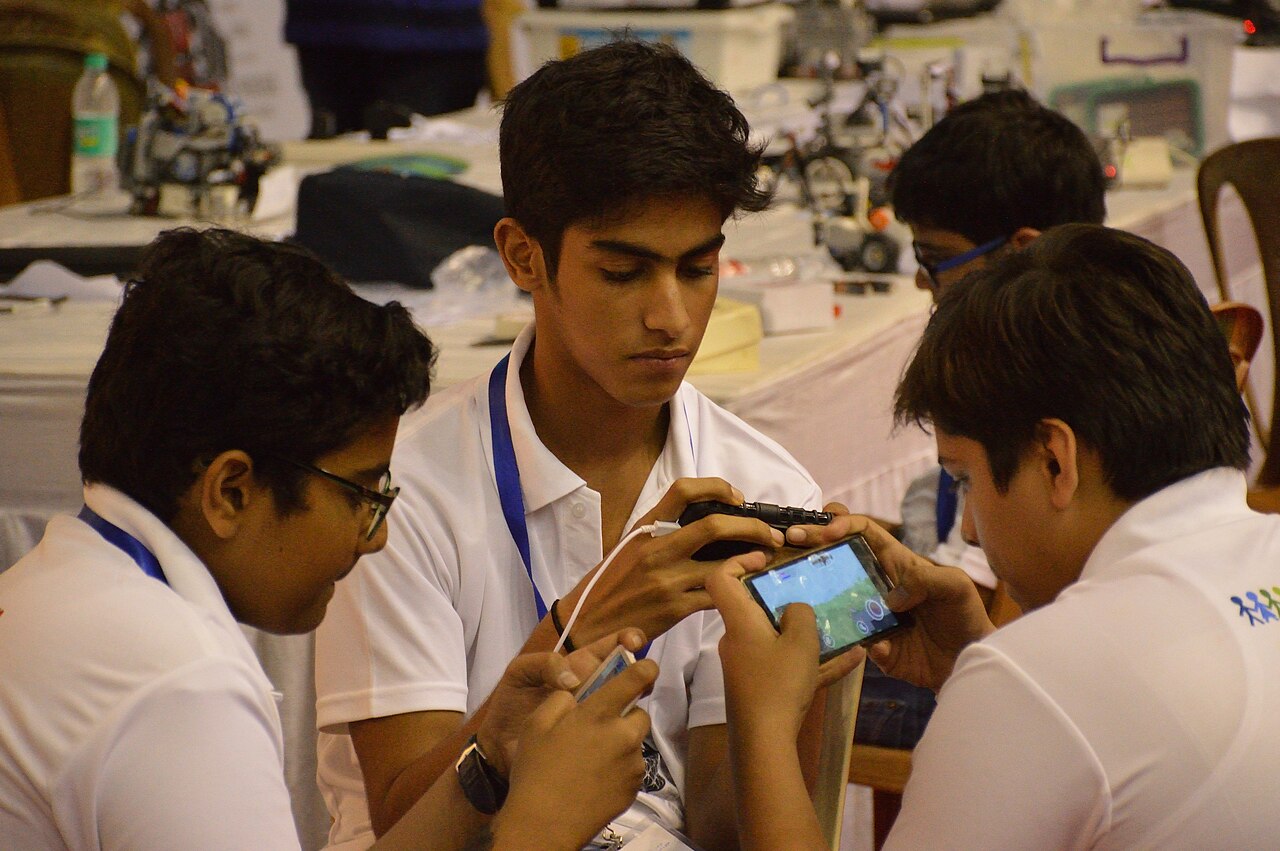
"Just five more minutes, Mumma." If you are the parent of a Class 9–12 student, you have probably heard this sentence more times than you can count. Phones are now where our children study, chat, relax and sometimes lose hours without noticing. In a board-exam year, that worry becomes sharper.
The good news: you don't have to choose between banning the phone and giving up. This guide explains what Indian guidelines actually say about screen time, what a healthy routine looks like for a teenager, and how to set rules your child will follow without daily fights.
What the numbers say about Indian teenagers
You are not imagining it — teenagers in India are spending a lot of time on screens. An Observer Research Foundation article (April 2026) brings together several studies:
- A study by the National Council of CBSE Schools found that about 74% of students spend more than two hours a day on screens for non-academic purposes, and about 21% spend more than four hours.
- ASER 2024 data cited in the same article shows that 82.2% of teenagers aged 14–16 know how to use a smartphone, but only 57% use it for education, while 76% mainly use it for social media.
So the phone itself isn't the problem. How it's used is.
What is the recommended screen time for teenagers?
There is no single national rule for teenagers' total screen time at home. But two Indian guidelines give useful reference points.
PRAGYATA guidelines (for online classes)
The Ministry of Education's PRAGYATA guidelines on digital education, released on 14 July 2020, recommend that online classes for Classes 9–12 have a maximum of four sessions of 30–45 minutes a day. That's for school learning, not entertainment.
Karnataka's draft policy (for non-academic use)
In March 2026, Karnataka proposed a draft Policy for Responsible Digital Use Among Students for Classes 9–12. Prepared by the state health department with NIMHANS and the education department, it suggests capping non-academic screen time at one hour a day. It is still a draft, but it's a helpful benchmark.
A practical takeaway: separate study screen time from fun screen time. Study time can be longer if it is focused. Fun screen time of around an hour on school days is a sensible target for a board-year student.
Why screen time matters more in a board year
- Sleep: late-night scrolling pushes bedtime later, and a tired brain remembers less.
- Focus: constant notifications break concentration. Studying with the phone face-up on the desk is not the same as studying.
- Memory: revision needs quiet, repeated effort. Short videos train the brain to expect quick rewards.
The Karnataka draft also notes studies suggesting that nearly a quarter of adolescents show signs of internet addiction, linked with anxiety, sleep disruption and attention problems. That's a reason for balance, not panic.
Screen time rules for teenagers that actually work
1. Make the rules together
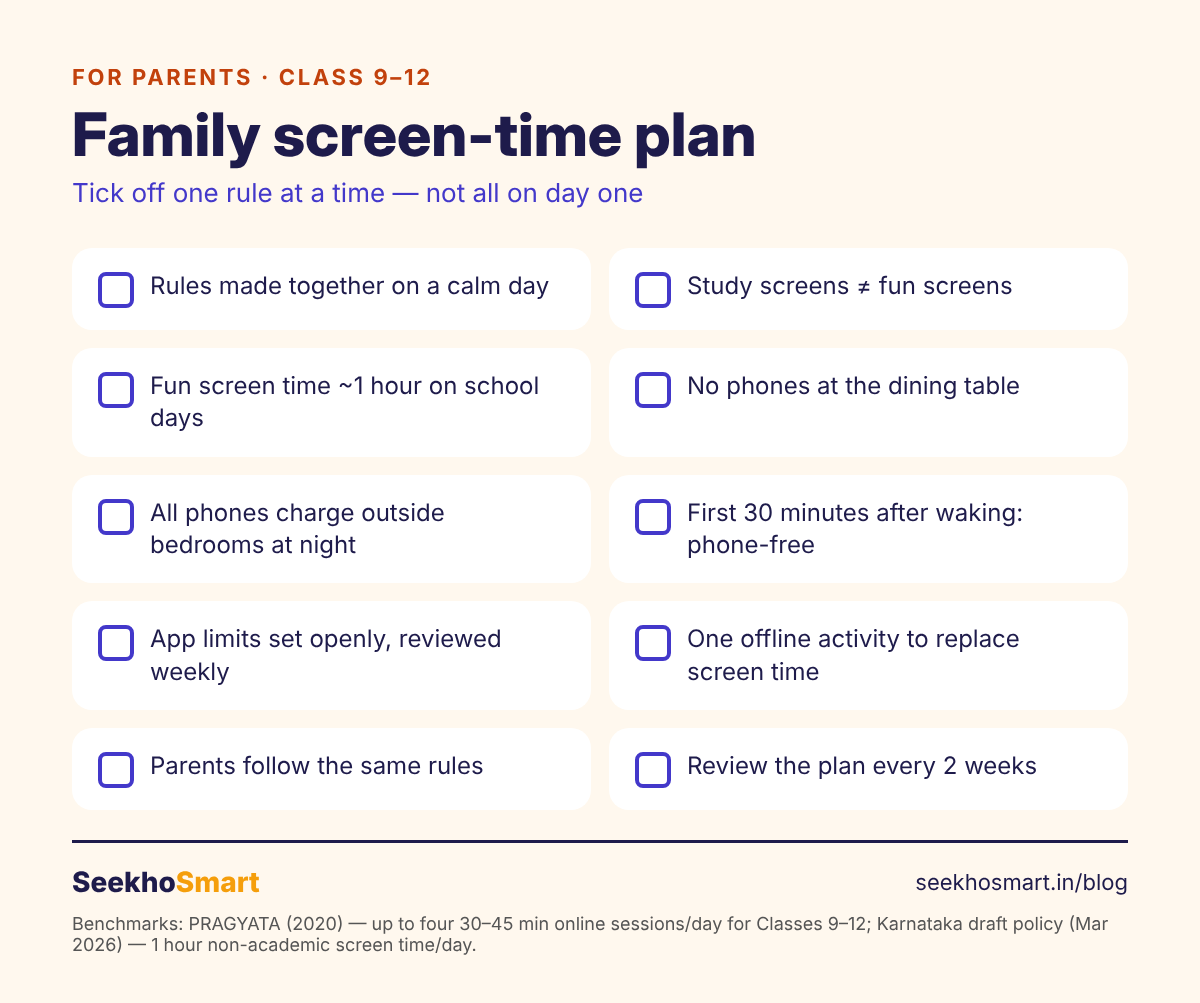
Sit down with your child on a calm day — not after a fight. Ask: "How much time do you think is fair for fun on school days? On Sundays?" Teenagers follow rules they helped make far more than rules handed down.
2. Split study screens and fun screens
If your child uses the phone for school, agree on which apps count as study. Online classes, practice apps and school portals are study. Reels, games and chats are fun time.
3. Create device-free zones and times
The Karnataka draft recommends device-free zones at home and structured routines. Simple ones that work in most Indian homes:
- No phones at the dining table.
- No phones in the bedroom after a fixed time (for example, 10 pm). Charge all phones — yours too — in the living room.
- The first 30 minutes after waking up stay phone-free.
4. Use the phone's own tools
Most Android phones and iPhones have screen-time or digital wellbeing settings. Use them with your child, not secretly. Set daily limits on the apps they agree are distracting, and review the weekly report together.
5. Replace, don't just remove
If you take away an hour of phone time, something must fill it. A walk, a sport, cooking together, music practice or simply chatting over chai. A teenager with nothing to do will return to the phone.
6. Be the example
Children copy what we do, not what we say. If you scroll at dinner, they will too. Try keeping your own phone away during your child's study hours.
What to do when the rules break
They will break — that's normal. When it happens:
- Stay calm. Shouting usually leads to more secret phone use, not less.
- Talk about the reason. Was the work too hard? Were they bored or stressed? Phones are often an escape from something else.
- Adjust, don't abandon. If one hour isn't working, try two shorter slots. Review the plan every two weeks.
- Notice good days. "You stuck to your time all week — that's great" works better than pointing out failures.
When to seek help
If your child seems withdrawn, stops eating or sleeping properly, or becomes very angry or anxious when the phone is taken away, speak to their class teacher or school counsellor. You can also call Tele-MANAS, the government's free mental health helpline, on 14416 or 1800-891-4416, available 24x7.
How SeekhoSmart helps your child use screen time well
You can't remove the phone from a board-year student's life, but you can make sure their study time on it is well spent. SeekhoSmart turns screen time into focused practice. Its adaptive daily study plan gives your child a clear, short list of what to revise each day, so they don't drift into random videos "for studying". Streaks and XP reward showing up every day, and you can see that consistency at a glance — without asking "Did you study today?" ten times. Everything is NCERT-aligned for Class 9–12, available in Hindi or English, and free to start.
Try SeekhoSmart free with your child → seekhosmart.in
Frequently asked questions
What is the recommended screen time for teenagers in India?+
There is no single national limit for total screen time at home. The PRAGYATA guidelines suggest up to four 30–45 minute online class sessions a day for Classes 9–12, and Karnataka's 2026 draft policy suggests one hour of non-academic screen time a day.
What is the average screen time for teenagers?+
A National Council of CBSE Schools study found about 74% of students spend more than two hours a day on non-academic screen use, and about 21% spend more than four hours.
What are good screen time rules for teenagers?+
Make the rules together, separate study and fun screens, keep phones out of bedrooms at night, use the phone's built-in limits openly, and replace screen time with activities your child enjoys.
How can I manage screen time for my teenager without fights?+
Agree on rules on a calm day, review them every two weeks, praise good days and follow the same rules yourself.
- SeekhoSmart (infographic)
- Biswarup Ganguly / Wikimedia Commons (CC BY 3.0)