For years, a "lab" in most schools meant Physics, Chemistry, Biology and a computer room. CBSE now wants one more: a composite skill lab, where students from Class 6 to 12 learn by building, fixing and making things.
For existing CBSE schools, the deadline is about ten months away. For schools seeking fresh affiliation, it is already a requirement. This guide sets out what the rule says, what it does not say, and a practical plan to get your lab ready without overspending.
What CBSE requires
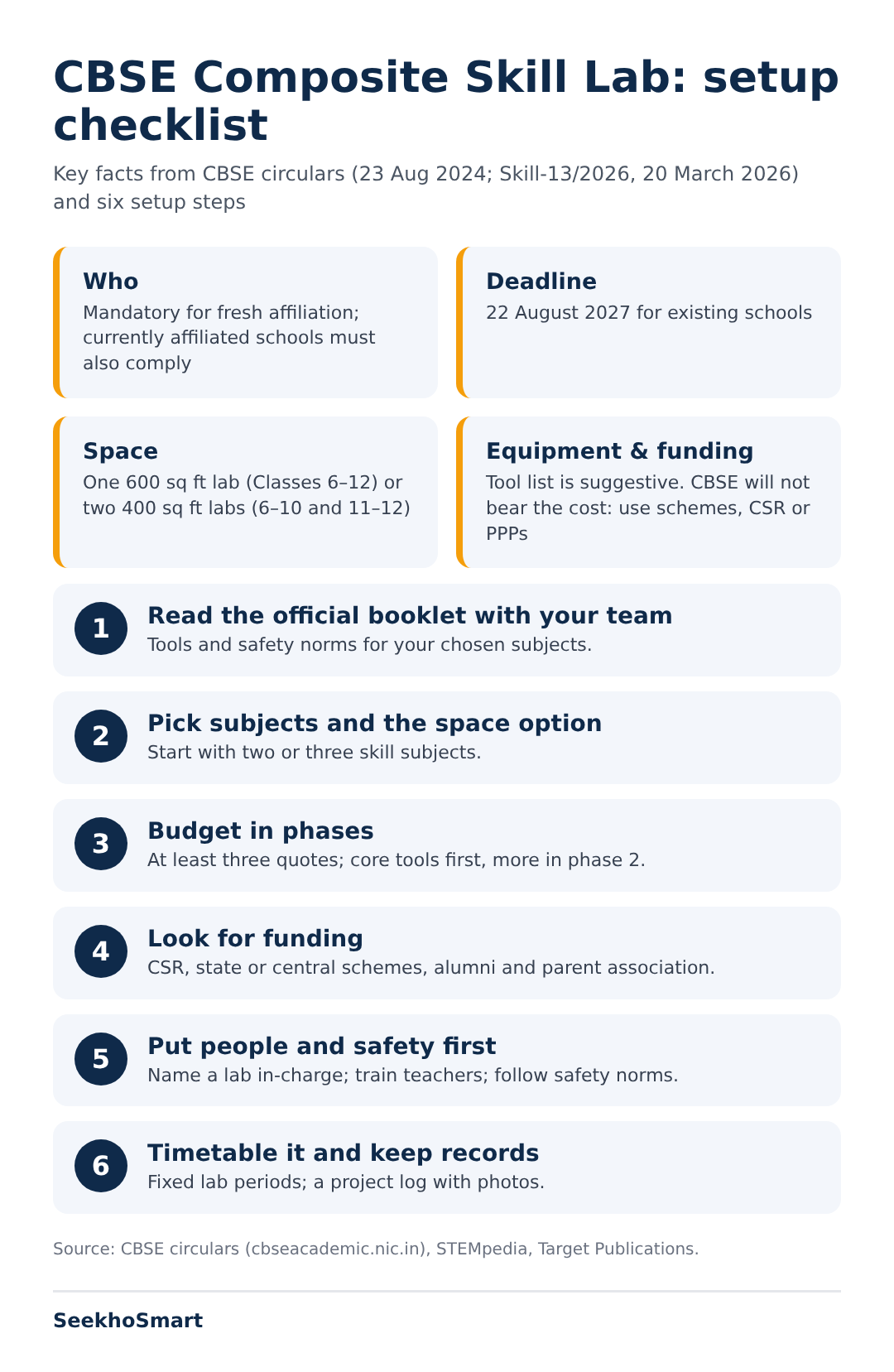
CBSE first announced composite skill labs in a circular dated 23 August 2024, after a Governing Body decision (STEMpedia summary of the circular). It followed up with detailed guidelines in circular Skill-13/2026, dated 20 March 2026, titled "Guidelines for Establishment of 'Composite Skill Labs' in CBSE schools" (CBSE circulars list, text of the circular).
The key points:
- Who: It is mandatory for all schools seeking fresh affiliation. Currently affiliated schools must also comply.
- Deadline for existing schools: 22 August 2027, three years from the original circular.
- Space: Either one lab of 600 sq ft for Classes 6–12, or two labs of 400 sq ft each, one for Classes 6–10 and one for Classes 11–12.
- Equipment: CBSE's guideline booklet covers infrastructure, tool specifications and safety norms. The tool list is suggestive, and schools may adapt it to their readiness and needs (Target Publications).
- Funding: CBSE will not bear the cost. Schools may use government schemes, CSR support or public-private partnerships (STEMpedia).
The policy links to NEP 2020 and the National Curriculum Framework for School Education 2023, which push skill education from Class 6 onwards.
Why this matters beyond compliance
It is tempting to treat the lab as one more box to tick before an inspection. That would waste a real opportunity.
A working lab where students build a sensor project, repair a circuit or grow a crop is something they can see on a school visit. It also gives you material for your website, your social media and your admission season.
It supports the rest of CBSE's agenda too. CBSE has launched a curriculum framework for Computational Thinking and Artificial Intelligence and has announced a Skill Expo and Guidance Festival for 2026-27 (CBSE circulars). A lab that is actually used makes all of these easier.
Which skill subjects to start with
The 2024 circular listed skill areas schools can choose from based on resources and student interest, including (STEMpedia):
- Artificial Intelligence
- Information Technology
- Design Thinking and Innovation
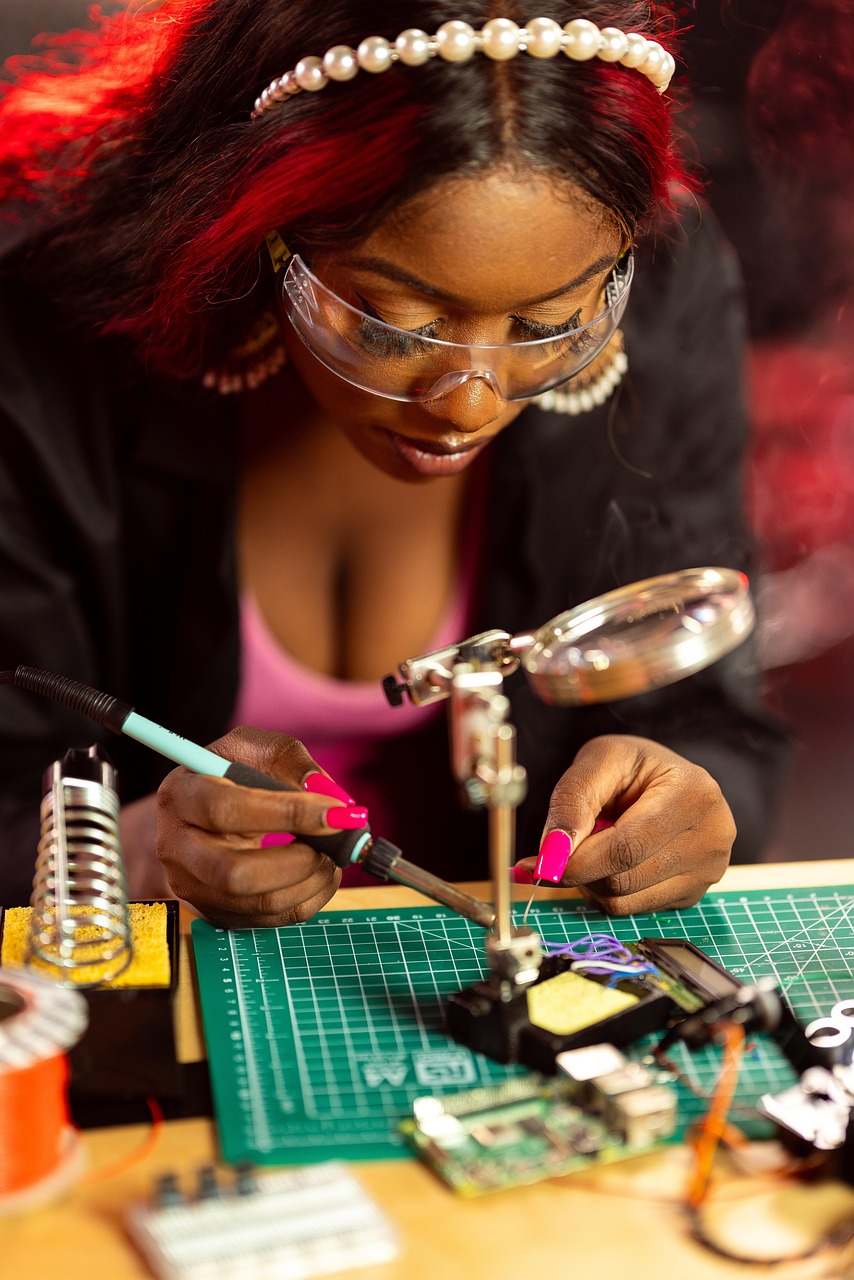
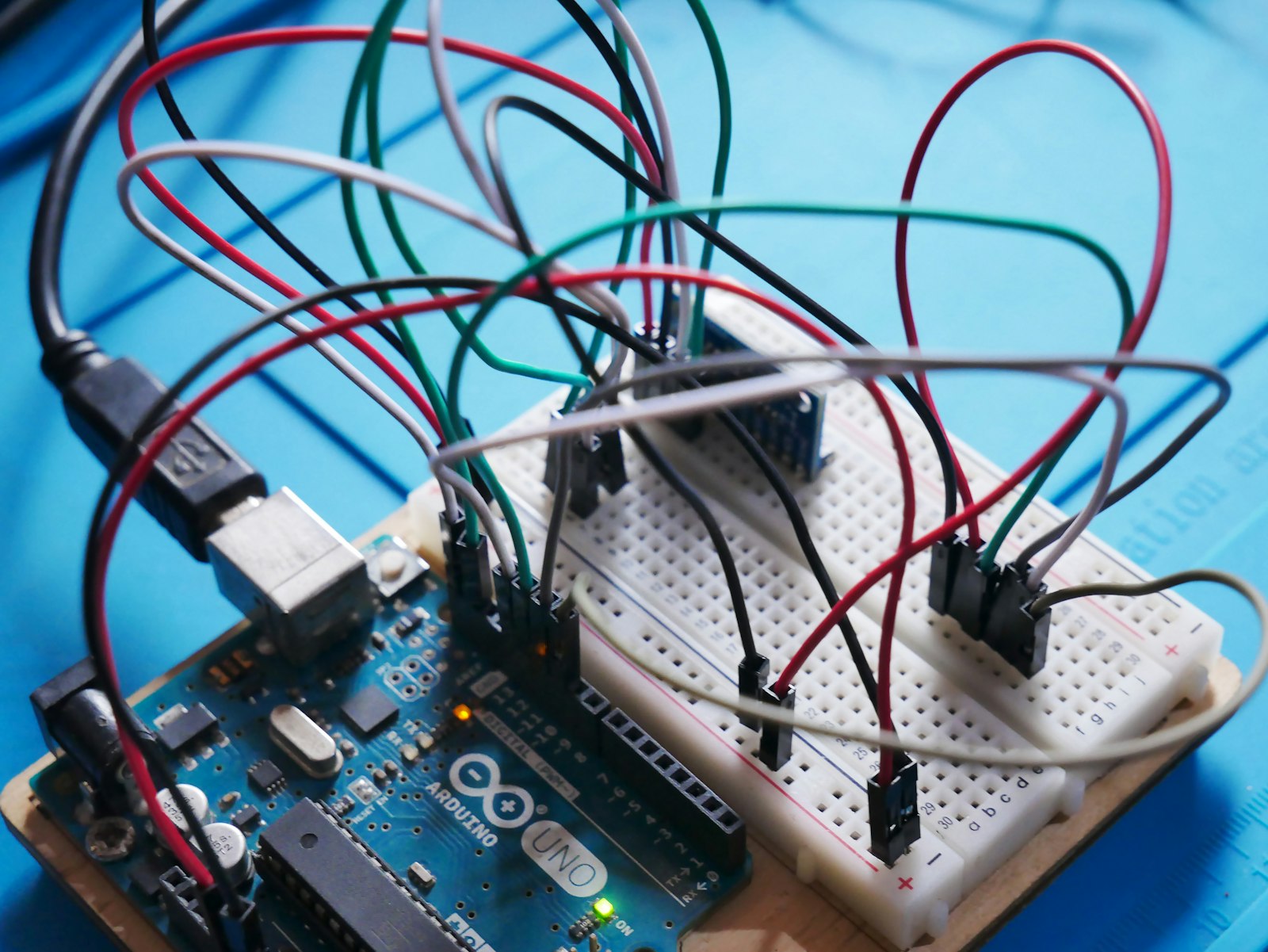
- Electronics and Electrical
- Agriculture
- Automobile
- Banking and Insurance
You don't need all of them. Start with two or three that fit your students and staff. A city school with strong computer teachers might begin with AI, IT and design thinking. A school with open land might add agriculture. Ask Class 8–10 students what they would choose; their answers predict who will actually use the lab.
A 6-step setup plan
- Read the official booklet with your team. Get the full guidelines from cbseacademic.nic.in and read them with your lab in-charge, accountant and a senior teacher. Note the tools and safety norms for your chosen subjects only.
- Pick your subjects and the space option. Decide between one 600 sq ft room or two 400 sq ft rooms. If your senior and junior wings are in different buildings, two labs may be easier to timetable.
- Budget in phases. CBSE has not fixed a cost, and it depends on the subjects you choose. Get at least three quotes for the tools on the suggestive list. Buy the core tools for your first subjects in phase 1, then add more in phase 2. Be wary of vendors selling large "complete lab" packages before you know what will be used.
- Look for funding. Approach local companies about CSR support, check state or central schemes your school qualifies for, and talk to your alumni and parent association.
- Put people and safety first. Name a lab in-charge and give them time in the timetable. Train teachers before students arrive. Follow the safety norms in the booklet: storage, first aid, supervision and tool handling.
- Timetable it and keep records. Give each section fixed lab periods. Keep a simple log of projects, with photos. This becomes your evidence for CBSE inspections and your best marketing material.

Mistakes to avoid
- Leaving it to mid-2027. Vendors, electricians and carpenters can get busy as the deadline nears.
- Buying everything at once. Equipment nobody is trained to use ends up gathering dust.
- No trained teacher. A lab without a confident in-charge stays locked.
- Only for toppers or competitions. The rule covers Classes 6–12. Plan access for every section.
- Ignoring maintenance. Budget each year for consumables and repairs, not just the first purchase.
How to measure if the lab is working
Set a few simple measures for the first year:
- Lab periods actually held versus timetabled
- Number of student projects completed per class
- Students choosing a skill subject in Classes 9 and 11
- Projects shown at school exhibitions or the CBSE Skill Expo
Review them each term with your lab in-charge. Numbers like these tell you whether to expand in phase 2.
How SeekhoSmart supports your school alongside the lab
A skill lab builds hands-on ability. Your board results still depend on steady practice in core subjects, and teachers cannot give every student individual practice in class. SeekhoSmart adds that layer at no upfront cost: it is free to start. Students get NCERT-aligned practice and an adaptive daily study plan that adjusts to each learner's weak chapters, plus AI explanations of every answer, including wrong ones, so doubts are cleared at home. Its 10-year PYQ bank tagged by chapter helps Class 10 and 12 students prepare for boards without extra load on your teachers. It works in Hindi and English, so it fits schools across regions.
Try SeekhoSmart for your school → seekhosmart.in
Padhai, ab smart tareeke se.
Frequently asked questions
What is a composite skill lab in CBSE schools?+
It is a shared lab where students from Class 6 to 12 learn skill subjects such as AI, IT, electronics or agriculture through hands-on work. CBSE requires it for fresh affiliation and for existing schools by 22 August 2027.
Where can I find the CBSE composite skill lab guidelines and circular?+
The guidelines are in CBSE circular Skill-13/2026 dated 20 March 2026, listed on cbseacademic.nic.in under circulars, along with a booklet on infrastructure, tools and safety.
Is there a fixed composite skill lab equipment list?+
CBSE provides a tool list, but it is suggestive. Schools may adapt it based on their readiness and the skill subjects they offer.
What is the minimum area for a CBSE composite skill lab?+
Either one lab of 600 sq ft for Classes 6–12, or two labs of 400 sq ft each, one for Classes 6–10 and one for Classes 11–12.
- SeekhoSmart (infographic)
- This_is_Engineering / Pixabay
- Vishnu Mohanan / Unsplash
- Poddarcollegejpr / Pixabay