Ask any CBSE principal about teacher training and you'll hear the same worries. How many hours does each teacher need? What counts? Which portal? What if an inspector asks for records? Searches like "cbse teachers training", "cbse teachers training portal" and "cbse teachers training certificate download" show how many schools are trying to work this out.
Now, halfway through the 2026-27 session, is a good time to check where your staff stands. This guide sets out what CBSE's continuous professional development (CPD) framework asks for, this year's training theme, and a simple plan you can roll out in your school. It is written for principals and school owners, especially those running Classes 9–12.
The CBSE CPD framework in one minute
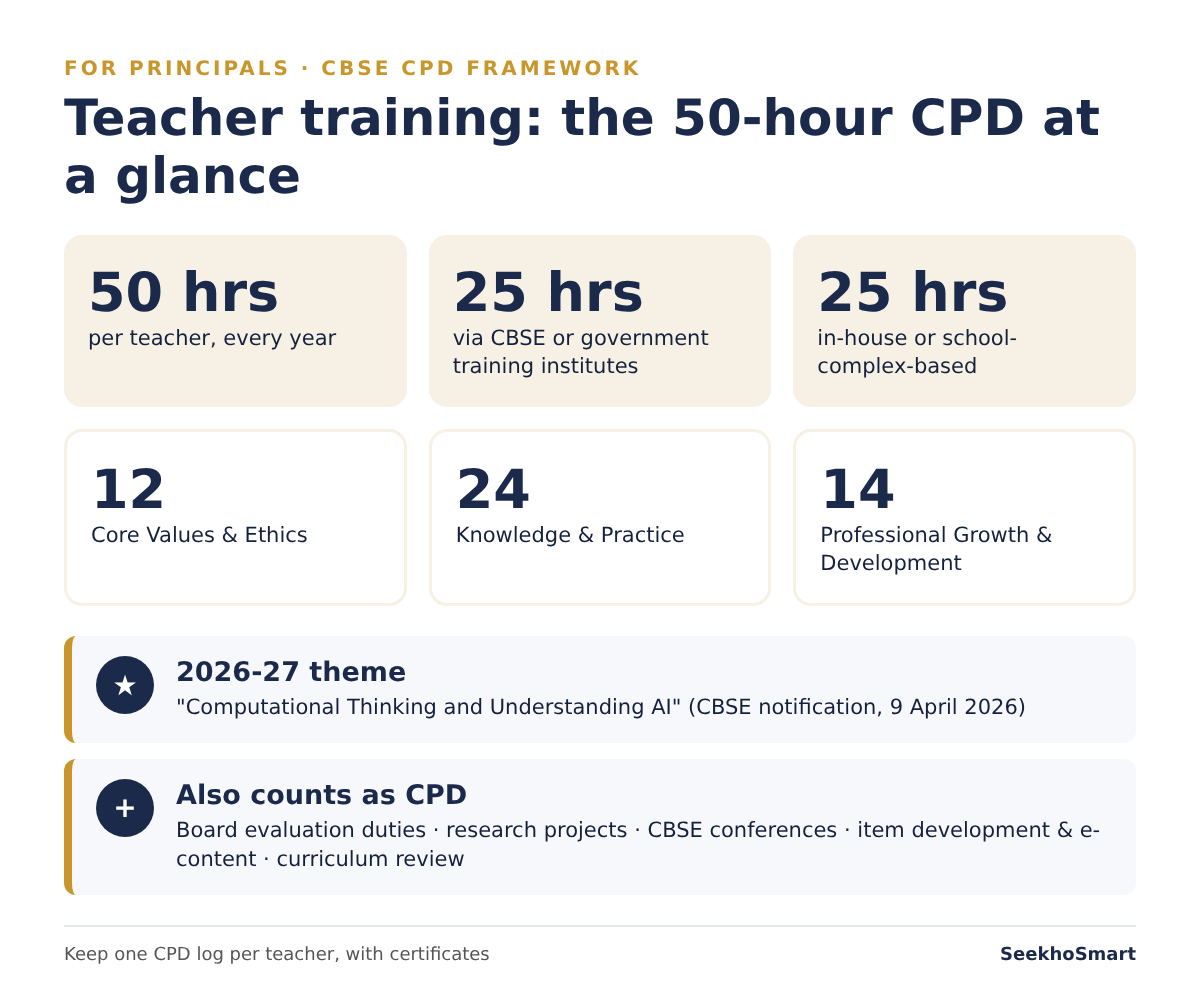
In April 2025, CBSE issued circulars setting out an annual Continuous Professional Development framework of 50 hours for teachers and school heads in affiliated schools, aligned with NEP 2020 and the National Professional Standards for Teachers (NPST) (Gulf News; Careers360).
How the 50 hours are split by source:
- 25 hours through CBSE or government (regional) training institutes.
- 25 hours through in-house or school-complex-based training.
How the 50 hours are split by NPST domain:
| Domain | Hours |
|---|---|
| Core Values and Ethics | 12 |
| Knowledge and Practice | 24 |
| Professional Growth and Development | 14 |
| Total | 50 |
CBSE described adherence as mandatory for all affiliated institutions, and urged school heads to lead by example (Gulf News).
What counts toward CPD hours
Many schools miss this, so teachers end up short of hours they have actually done. According to the framework as reported, academic work like this is recognised for CPD (Careers360):
- Evaluation duties for Class 10 and 12 board exams and practicals
- Research projects and presentations
- Participation in CBSE conferences
- Item (question) development, e-content creation and capacity-building programme development
- Curriculum review
Your Class 10 and 12 teachers who do board evaluation and practical-exam duties are often closer to 50 hours than their records show. Log those hours.
The 2026-27 theme: Computational Thinking and Understanding AI
Each year CBSE sets a training theme. In 2025 it was STEM education. For the current session, a CBSE notification dated 9 April 2026 set the theme as "Computational Thinking and Understanding AI", with sub-themes including (AACRAO Edge summary):
- Foundations of Computational Thinking (CT) and AI Readiness
- Mathematics as the Cornerstone of Computational Thinking and AI readiness
- AI in Real-World Contexts
- Assessment and Pedagogy in CT and AI
- Ethics and Responsible use of AI
The same report says schools organising offline workshops must keep training records, and that CBSE-run regional workshops carry a ₹700 registration fee.
This theme comes with a curriculum change. From 2026-27, CBSE schools are introducing a computational thinking and AI curriculum for Classes 3 to 8, under NEP 2020 and NCF-SE 2023 (Careers360). Even if your focus is the senior classes, your maths, science and computer teachers will benefit from this training. Ethics and responsible use of AI matters for every teacher whose students now use AI tools for homework.
A simple 50-hour plan for your school
Step 1: Audit (this week)
Make a one-page CPD log per teacher with columns for date, programme, provider, domain, hours, and certificate link. Ask teachers to fill in what they have done since April 2026. The audit alone will show you who is far behind.
Step 2: Map the gaps by domain
The 24 hours of Knowledge and Practice are often the easiest to fill. Core Values and Ethics (12 hours) and Professional Growth (14 hours) are often the gaps. Plan in-house sessions around them.
Step 3: Book external hours early
The 25 hours from CBSE or government institutes are the hardest to schedule. Nominate teachers early for regional workshops on this year's theme. Keep the circulars and nomination letters in the CPD file.
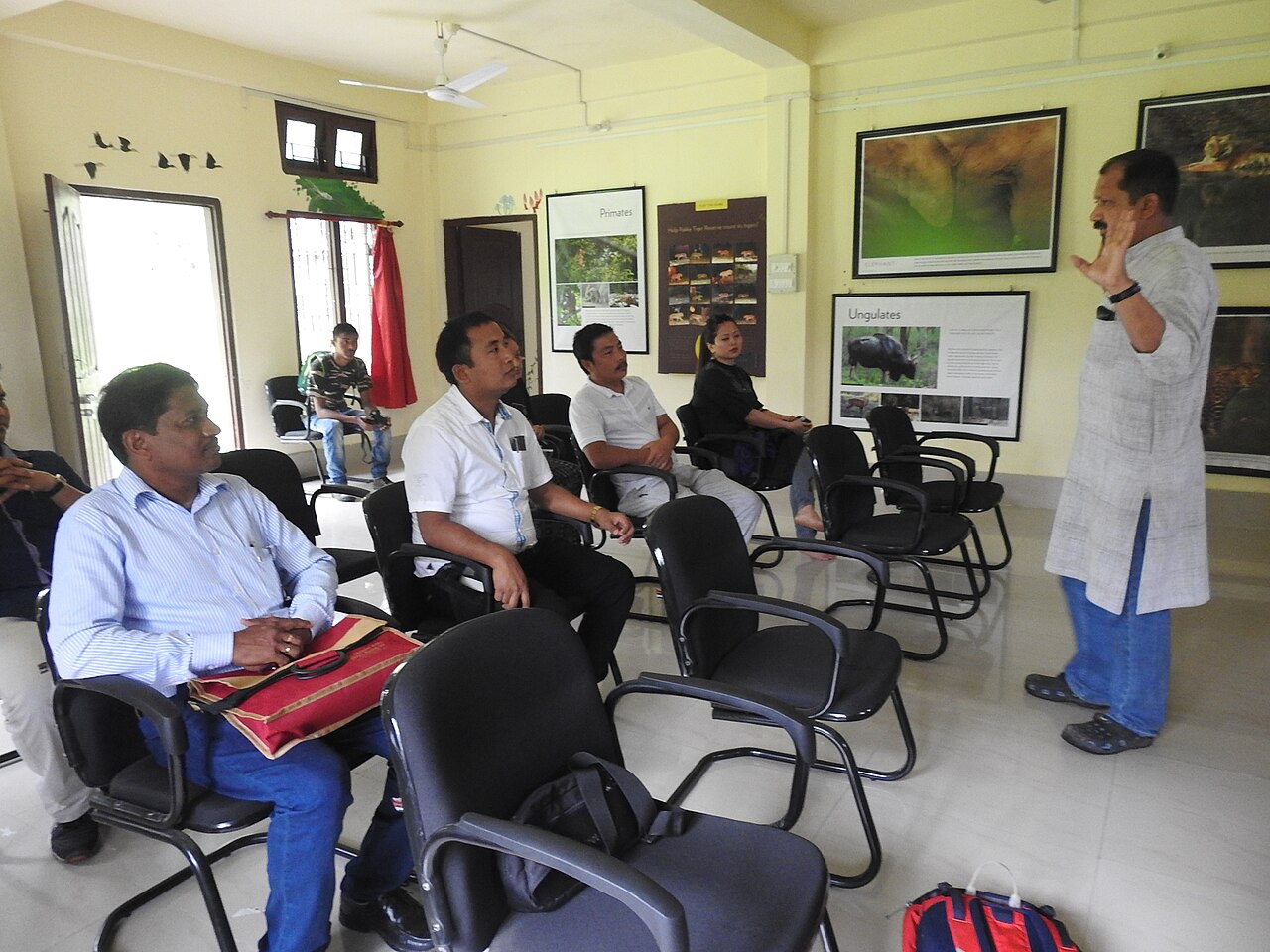
Step 4: Run in-house sessions that solve real problems
In-house hours should solve real problems in your school, not just tick a box. Good options for Classes 9–12 this term:
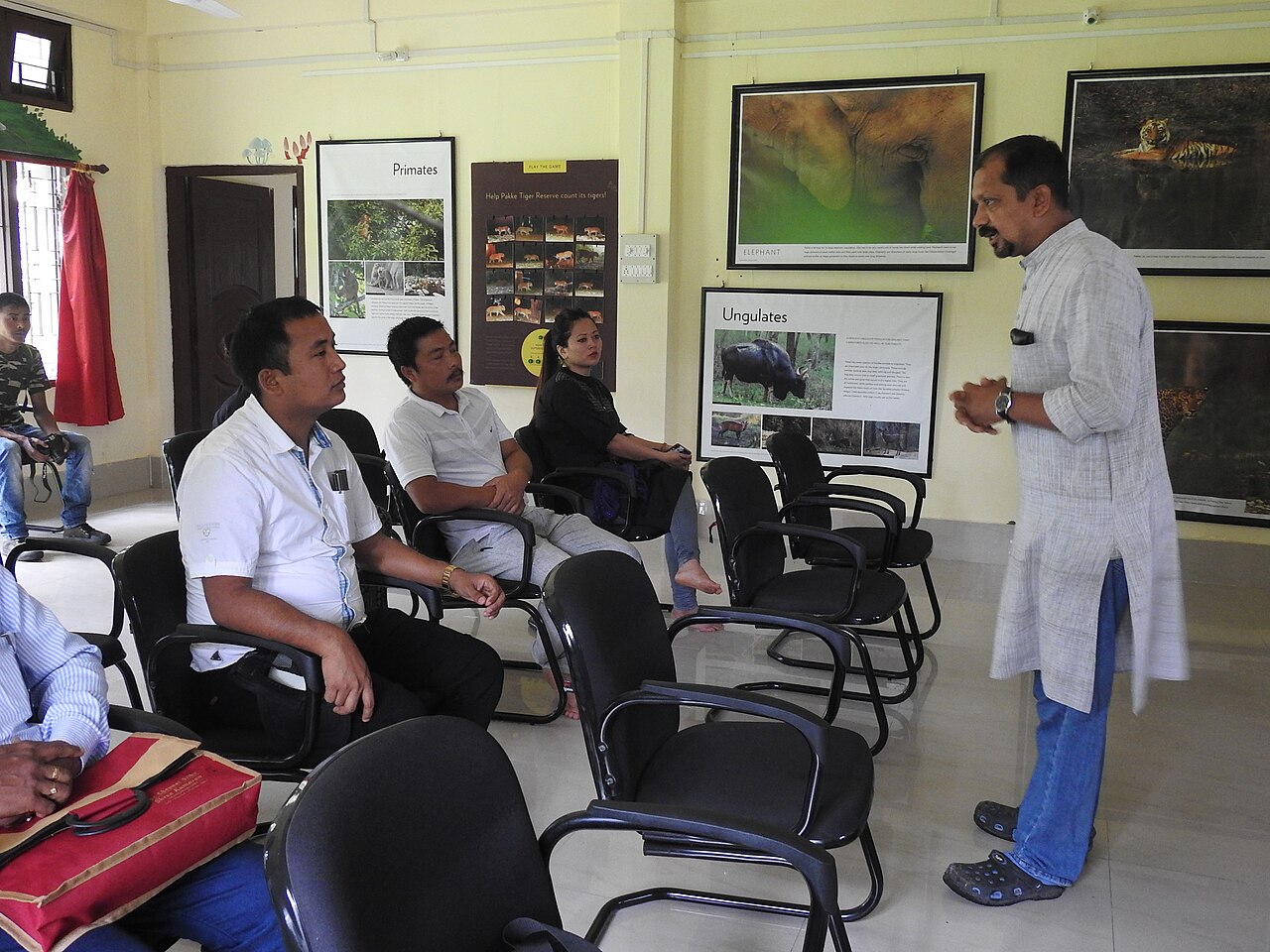
- Pre-board analysis workshop: subject teams analyse pre-board scripts and plan reteaching (Knowledge and Practice).
- AI in the classroom: responsible use, academic honesty, and designing assignments that AI can't simply do for students (fits this year's theme).
- Peer observation: teachers observe each other's lessons and give structured feedback (Professional Growth).
- Inclusive classrooms and student well-being (Core Values and Ethics).
Step 5: Partner with a school complex
Share expert sessions with nearby CBSE schools. It cuts costs and adds variety. These sessions count as school-complex-based hours.
Step 6: Review every term
Put CPD on the agenda at every term-end staff meeting. A teacher who has 15 hours by October can still reach 50 by March. A teacher who has 5 hours by February can't.
A quarter-wise CPD calendar
| Term | Focus | Target hours (cumulative) |
|---|---|---|
| April–June | Theme orientation, ethics, external workshop nominations | 12–15 |
| July–September | Subject pedagogy, assessment design | 25–30 |
| October–December | Pre-board analysis, AI in classrooms, peer observation | 38–42 |
| January–March | Board evaluation duties, reflection, documentation | 50 |
Check the latest CBSE training circulars on cbse.gov.in and cbseacademic.nic.in before finalising your plan, as details and portals can change from year to year.
How SeekhoSmart supports your teachers and students
Training helps teachers teach better in class. The next problem is giving every student enough practice and feedback outside class without overloading staff. SeekhoSmart can fill that gap for your Class 9–12 students.
- NCERT-aligned practice and a 10-year PYQ bank tagged by chapter: after a pre-board analysis workshop, teachers can send students straight to chapter-wise board questions instead of building worksheets.
- AI explanations of every answer, including wrong ones, plus an adaptive daily study plan: each student gets personalised practice and clear explanations, which puts this year's AI theme to good use and gives teachers time back.
It works in Hindi and English, and is free to start, so there is no upfront cost to pilot it with one section.
Try it for your school → seekhosmart.in
Frequently asked questions
How many hours of CBSE teachers training are mandatory?+
CBSE's CPD framework (April 2025) sets 50 hours a year per teacher: 25 hours through CBSE or government training institutes and 25 hours in-house or school-complex-based.
What are the CBSE teachers training topics for 2026-27?+
The 2026-27 theme is 'Computational Thinking and Understanding AI' (notified 9 April 2026), with sub-themes such as AI readiness, assessment and pedagogy in CT and AI, and ethics and responsible use of AI.
What counts toward CBSE CPD hours?+
Besides training programmes, reported examples include board exam and practical evaluation duties, research projects, CBSE conferences, item development and e-content creation, and curriculum review.
Where do I find the CBSE teachers training circular and portal?+
Check the training and circular sections on cbse.gov.in and cbseacademic.nic.in; keep each teacher's certificates and nomination letters in a CPD log.